
Chairman Osamu Suzuki questions whether Tata's $3,000 car can meet standards, vowing to keep his Maruti brand working on more profitable models.

A law graduate from Osaka University, Ayukawa has been associated with Suzuki Motor for over three decades.
Suzuki Motorcycle India, a subsidiary of leading Japanese two-wheeler manufacturer Suzuki Motor Corporation, on Tuesday introduced four upgraded models of its existing motorcycles, 'Zeus' and 'Heat'.

Maruti Suzuki India on Tuesday said it has commenced export of its sports utility vehicle Fronx to Japan. The first consignment of over 1,600 vehicles left for Japan from Gujarat's Pipavav port, the country's largest carmaker said in a statement. Fronx will be the first SUV from Maruti Suzuki stable to be launched in Japan, it added.
Suzuki Motor Corporation's Indian subsidiary, Maruti Suzuki India Ltd (MSIL), is going to play an increasingly important role in designing and developing global vehicles for the Japanese auto company in the coming years.
Tata Motors is the leader in the electric car market with about 62 per cent share.

Maruti takes a leap in terms of technology with features like ADAS, a 360-degree camera, ventilated seats, a powered tailgate, audio system with Dolby Atmos and much more.

After a record-breaking year, India's automobile industry is entering 2026 on a relatively strong footing, with sales growth expected in the 6-8 per cent range. The outlook is underpinned by policy support, including GST rationalisation, easing monetary conditions, and income tax relief, which together are likely to improve affordability and sustain consumer demand across vehicle segments.

Between April and August this financial year, passenger car exports rose 8.5 per cent year-on-year (Y-o-Y), while domestic sales fell by 8.5 per cent.

Just a day after Volkswagen alleged the Japanese company had infringed an agreement by purchasing diesel engines from Fiat for its plant in Hungary, Suzuki demanded Volkswagen offload its 19.89 per cent holding in it.

Among the Sensex firms, State Bank of India, Maruti Suzuki India, Axis Bank, NTPC, BEL, Adani Ports, Eternal, Sun Pharmaceuticals, Power Grid, ITC, UltraTech Cement, Trent, HCL Technologies, Mahindra & Mahindra, and HDFC Bank were the major gainers. On the other hand, Tata Steel, Tata Consultancy Services, Tech Mahindra, Titan, Bajaj Finserv, Tata Motors, Bharti Airtel and Bajaj Finance were among the laggards.
SMILP, despite having an installed capacity to manufacture 100,000 vehicles, sold a little over half that number between April and December last year and 5,753 units in January 2007.
As if unsatisfied by the success story of Maruti, the new chief of the Indian arm of Japanese auto giant Suzuki Motor Co's on Friday claimed it will overtake the parent company in the next two years.
Japanese auto giant Suzuki Motor Corporation on Tuesday said it plans to make India an export hub for its small cars, mainly for European and African markets.

Maruti Suzuki produced 9,66,069 cars from January to December 2009, up 27 per cent from the year ago.
Proclaiming India as a major success story, Japanese small car major Suzuki Motor Corp said the record sales achieved its premium hatchback model, Swift in the country 'easily topped' targets in its first year of launch.
Maruti Suzuki India Ltd, the country's biggest carmaker, is set to play a larger role in the operations of parent Suzuki Motor and will contribute a third of the Japanese company's global sales by 2009-10, the Indian firm's managing director Shinzo Nakanishi said on Thursday.

Automobile exports from India rose 26 per cent year-on-year in September quarter driven by highest-ever shipments of passenger vehicles, two-wheelers and three-wheelers during the period, as per the latest data released by industry body SIAM.

Suzuki will produce EVs for the Indian market and will supply some of them to Toyota, which will provide technical support.

However, the company has not provided a timeline for the launch of the small electric car.
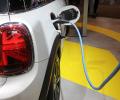
Maruti Suzuki India will launch electric vehicles in the country only after 2025 as demand for such vehicles at the moment is less and it would like to sell around 10,000 units a month whenever it enters the electric mobility space, company chairman RC Bhargava said on Wednesday. Addressing a virtual conference on the company's second quarter earnings, he said under the current circumstances a lot of things in the EV ecosystem such as batteries, charging infrastructure and electric supply are done by other parties and therefore the costing is not in the hands of the company. Also with fuel prices going up, car market leader Maruti Suzuki India is intensifying its focus on more CNG offerings of its models.

The company had set an annual production target of 250,000 for its Hansalpur plant in Gujarat.

Its production declined for the third consecutive year in financial year 2020-21 (FY21) to an 11-year low, while sales volume contracted for the second year to the lowest since FY15. The company manufactured around 1.08 million vehicles last fiscal, a decline from 1.17 million the previous year, and a steeper fall from its all-time high tally of 1.62 million reported in FY18.

Amid challenging market environment, Maruti Suzuki India and Mahindra & Mahindra reported an increase in vehicle dispatches to dealers last month while Tata Motors and Hyundai saw a year-on-year drop in sales.

Among major Sensex gainers Bajaj Finserv rose the most by 1.42 per cent, Axis Bank gained 0.80 per cent, Infosys by 0.72 per cent, Mahindra & Mahindra by 0.60 per cent, Tata Motors by 0.55 per cent, Bajaj Finance by 0.53 per cent and Tata Steel by 0.52 per cent. Kotak Mahindra Bank, ICICI Bank, HCL Technologies, Bharti Airtel, Maruti Suzuki India, Trent Ltd and Tata Consultancy Services were the losers.

Manufacturers of passenger vehicles (PVs) in the first half of the calendar year (2025) reported a modest 0.5 per cent year-on-year increase in wholesale dispatches, while retail sales grew 2.5 per cent for the same period, reflecting a calibrated approach by automakers amid elevated dealership inventories and cautious consumer sentiment. According to the Society of Indian Automobile Manufacturers (Siam), dispatches rose marginally to 2.16 million units, up from 2.15 million units a year earlier.
The Japanese giant is already investing Rs 6,000 to Rs 7,000 crore in its research and development (R&D) centre in India. Maruti Suzuki India (MSIL) will roll out a car completely made in India in the next three to four years, which will encompass all the major requirements, including design and engineering architecture, engine development, and the manufacturing process.

The board of Maruti Suzuki India (MSIL) on Tuesday approved a proposal to issue shares worth Rs 12,841 crore to parent company Suzuki Motor Corporation (SMC) for acquiring Suzuki Motor Gujarat (SMG). The Gujarat manufacturing plant - with an annual capacity of 750,000 units - is owned by SMG, a wholly-owned subsidiary of SMC. The shares issued to SMC will raise its ownership in MSIL from 56.48 per cent to 58.19 per cent--India's largest carmaker stated in a notice to BSE.
The Maruti Udyog board has approved the purchase of Suzuki Motor Corporation's shares in their joint venture Maruti Suzuki Automobile India Ltd for Rs 12 crore (Rs 120 million) and merge the arm with itself, the Lok Sabha was told on Thursday.

Mahindra & Mahindra plans to manage rare earth magnet supplies through alternative sourcing channels for the next nine months and will pursue 'engineering efforts' to address the raw material shortage situation amid growing product portfolio, according to a senior company executive. The imposition of export restrictions by China on key rare earth magnets has resulted in supply chain bottlenecks, impacting the user industries, including the auto and electronics sectors.

It's not only the Indian markets that command a valuation premium over their global peers; shares of subsidiaries of India-listed multinational companies (MNCs) also trade at rich valuations compared to their parent companies. An analysis of 12-month forward price-to-earnings (P/E) and price-to-book (P/B) multiples of domestically listed MNCs shows that most quotes have a premium ranging from 2.1x to 6x that of their parent. Similarly, P/B, in most cases, is significantly higher in the domestic market.
Maruti Suzuki's contribution to the sales revenue of its Japanese parent, Suzuki Motor Corporation (SMC), has touched the highest-ever figure during April-December of FY23. According to SMC's results declared on Tuesday, Maruti's share in its global revenues jumped from 33.42 per cent in April-December of FY22 to 40.93 per cent in the corresponding period of FY23.
